 Proven Sudoku
Hidden Pair
Also called Hidden Double, Concealed Pair.
New to this shorthand? How to read a sudoku grid explains r4c7, houses, candidates and the rest.
What it means
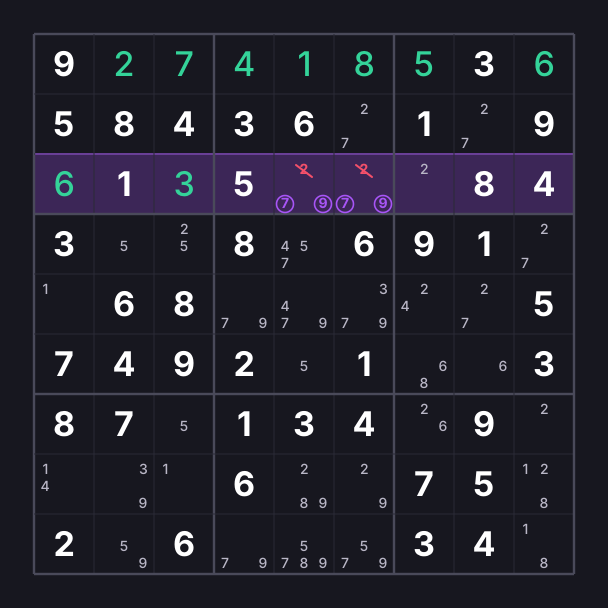
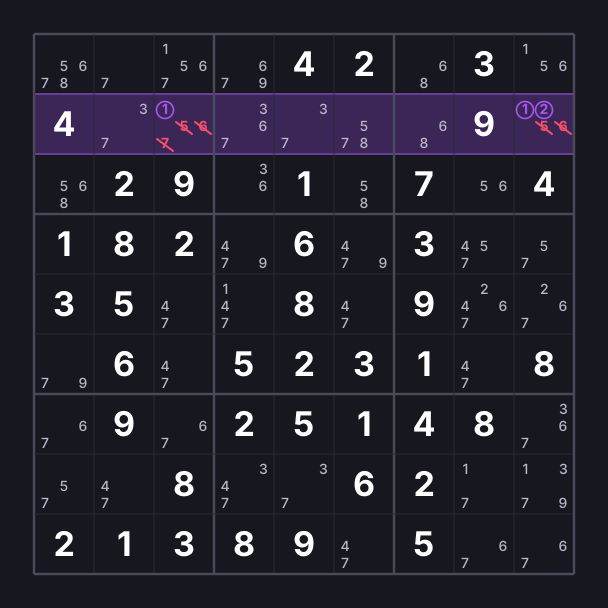
Two digits in one group can only go in the same two squares. Those squares must take those two digits, so rub every other digit out of both squares.
The exact rule, for stronger players
The rule, stated exactly: For a house H, if two digits are each confined to the same two cells of H, all other candidates may be eliminated from those two cells.
What it removes: Remove every candidate other than the two digits from the two cells.
Why it works: Both digits must be placed in H, and both are restricted to the same two cells, so those two cells hold exactly those two digits. Any other candidate in them is impossible.
Worked examples
These come from real Proven Sudoku boards. Nobody drew them by hand to make the pattern look neat. Each one is checked first, so the board is one you could really meet, the pattern is really there, and every digit it rules out is really wrong.
Learn these first
- Hidden SingleLook at one digit in one row, column or box.
- Naked PairTwo squares in the same group both hold only the same two digits.
Related subsets
- Hidden QuadFour digits in a group can only go in the same four squares.
- Hidden Subset (general form)Some numbers in a group have only a few homes left.
- Hidden TripleThree digits in a group can only go in the same three squares.
- Locked PairA pair that shares two groups at once, usually a row and a box.
- Locked TripleA triple that sits in two groups at once, usually a row and a box.
How often does it come up?
Our rough estimate: common at medium and hard difficulty.