 Proven Sudoku
X-Wing
Also called Fish of size 2, 2-Fish, Double Pair, Rectangle (loose usage).
New to this shorthand? How to read a sudoku grid explains r4c7, houses, candidates and the rest.
What it means
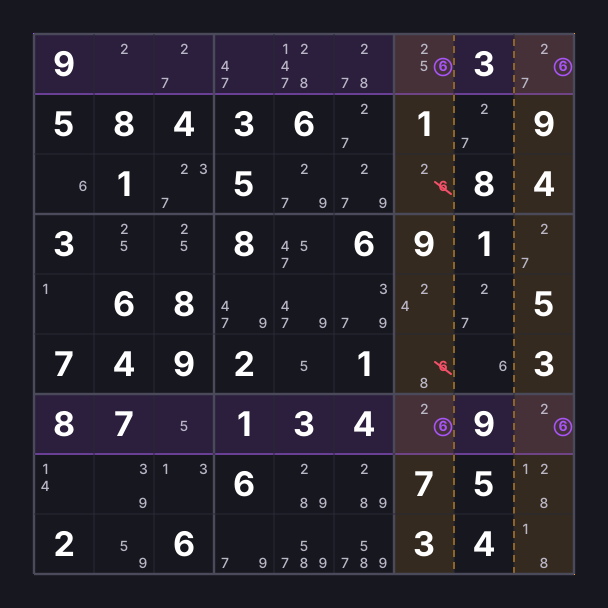
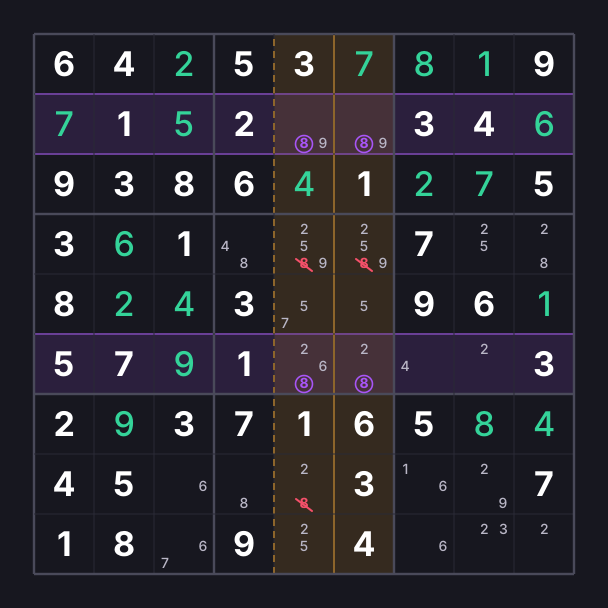
A digit is stuck in the same two columns in two different rows, making a rectangle. One of those rows takes the digit on the left, the other on the right. Either way both columns are used up, so the digit goes nowhere else in them.
The exact rule, for stronger players
The rule, stated exactly: For digit d, if two rows each contain d in exactly two cells, and those cells occupy the same two columns, then d may be eliminated from those two columns outside the two rows. The row and column roles may be exchanged.
What it removes: Remove d from all cells of the two cover lines that are not in the base lines.
Why it works: The two rows are base sets; each must place d once. Their four candidate cells sit at the intersections with two columns, the cover sets. Two placements must be distributed among two covers, so each cover is fully consumed and no other cell in either column can hold d.
Worked examples
These come from real Proven Sudoku boards. Nobody drew them by hand to make the pattern look neat. Each one is checked first, so the board is one you could really meet, the pattern is really there, and every digit it rules out is really wrong.
Learn these first
- Locked Candidates Type 1 (Pointing)Inside one box, every spot left for a digit sits in the same row or column.
- Hidden PairTwo digits in one group can only go in the same two squares.
Related basic fish
- Basic Fish (base and cover formulation)Pick some rows where a digit has only a few spots left.
- JellyfishThe X-Wing idea stretched to four rows and four columns.
- LeviathanA seven by seven version.
- SquirmbagA five by five version of the same idea.
- SwordfishThe same idea as an X-Wing but with three rows and three columns.
How often does it come up?
Our rough estimate: the most common fish by a wide margin, and the only one most solvers meet regularly.